
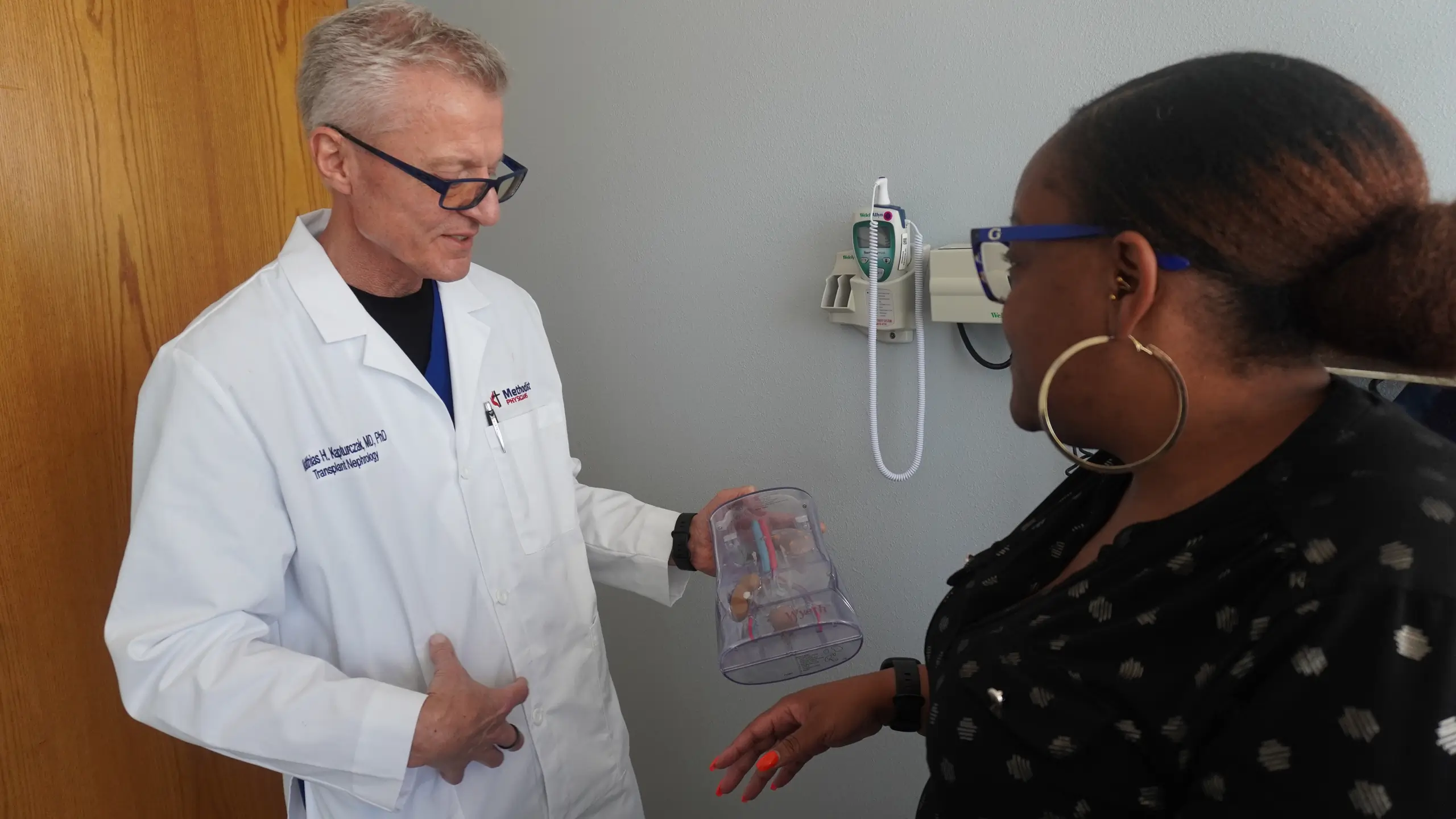
For many people with kidney failure, the path to a transplant can take years. As of July 30, 2026, there were 95,492 people nationwide waiting for a kidney, according to federal transplant data. The need is especially urgent in Texas, where diabetes -- the leading cause of kidney failure -- affects many families.
There are two main ways someone may receive a donated kidney. One option is to wait for a kidney from someone who has died: deceased donation. But there are not enough donated kidneys available for everyone who needs one, and the wait can take years.
Another option is living kidney donation. This is when a healthy person donates one kidney to someone who needs a transplant. The donor may be a relative, friend, coworker or even someone they have never met.
“Living donation provides the opportunity for somebody to be transplanted as early as possible -- ideally, even before the patient needs dialysis,” said Dr. Matthias Kapturczak, a transplant nephrologist and director of the abdominal transplant program with Methodist Transplant Institute at Methodist Hospital | Specialty and Transplant.
For some patients, that difference can amount to years.
“Depending on the blood type, waiting can sometimes be between eight and 10 years,” Kapturczak said. “That is a substantial number of years to wait.”
Why a living donor kidney can make such a difference
A living donor kidney can shorten or eliminate a recipient’s wait for a deceased donor kidney. Living kidney donation can also be scheduled, giving the medical team time to prepare the recipient and address health issues before surgery. That is an important advantage for people whose health may become more complicated while they are on dialysis.
Living donor kidneys also tend to function longer, on average, than kidneys from deceased donors. One reason is that potential living donors go through a careful medical evaluation before they are approved. Another is that the kidney spends very little time outside the body before transplant.
That careful screening, along with the shorter time between donation and transplant, helps explain why living donor kidneys often perform so well.
“One living donor saves two lives, in a way,” Kapturczak said.
The recipient receives a kidney, while another patient who does not have a living donor may move closer to receiving a kidney from the transplant waitlist.
Donor safety comes first
The decision to donate is significant, and Methodist Healthcare’s evaluation is intentionally thorough. Each year, far more people contact the program about donating than ultimately donate. Many do not move past the initial health screening, and only a portion of those who complete a full evaluation are approved. Kapturczak said that attrition is by design.
“We are deliberately looking for reasons to say no. The recipient needs a kidney, but the donor is a healthy person who came to us voluntarily, and their safety is the only thing that can decide this.”
The process begins with online education and a health questionnaire, followed by a conversation with a donor coordinator. Initial bloodwork helps assess kidney function, blood type and compatibility. Potential living donors who continue in the process may meet with a kidney transplant doctor, transplant surgeon, social worker, dietitian and other members of the transplant team. Imaging allows the team to examine the kidneys and blood vessels before a selection committee reviews the complete evaluation.
Any potential donor has an advocate whose only role is to represent the donor, independent of the recipient’s care team.
“We have to make sure we have personnel who are trained and sensitive enough to recognize pressure and protect the donor at all costs,” Kapturczak said. “The evaluation process does not obligate you in any way to actually donate.”
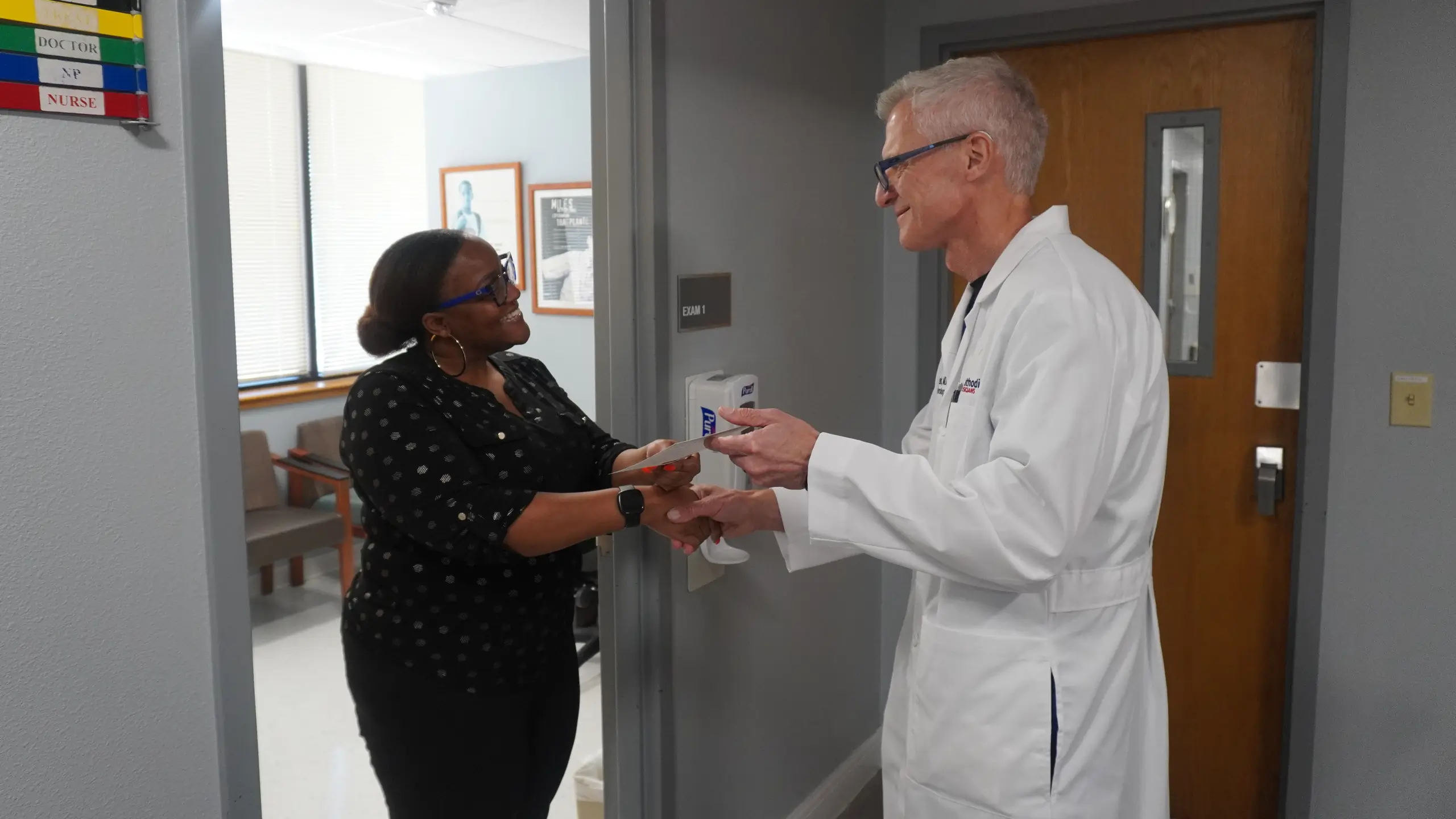
Potential living donors may pause or withdraw at any time, and Methodist Healthcare protects the confidentiality of that decision. Additionally, the advocate can stop approval if there are any concerns.
“It is very important for us that donors know they are absolutely protected.”
Education is also intentionally repeated throughout the evaluation.
“We purposely have this redundancy, because even if you have a list of questions, you are bound to miss something,” Kapturczak said. “Proper consent is really important so that donors understand the risk.”
Those risks are discussed openly. Donation is major surgery, recovery varies from person to person, and while most donors go on to live long, healthy lives with one kidney, there is a small long-term increase in the risk of kidney problems later in life.
Methodist Healthcare also maintains contact after surgery. Required follow-up includes health checks and laboratory testing, and living donors can return to the program if questions or complications arise.
“For us, the living donors are a top priority,” Kapturczak said. “It is very important donors know they can always come back.”
Common myths should not end the conversation
One common misconception is that a donor must be a blood relative. In reality, friends, spouses, coworkers and people with no relationship to a recipient may be considered. Age alone does not automatically disqualify someone, either; every candidate is evaluated individually based on overall health and kidney function.
Kapturczak encourages interested adults not to rule themselves out.
“We evaluate everybody individually. At least ask us, and we will help guide people through the decision-making process.”
Many people also assume donation requires a long hospital stay and recovery. At Methodist Healthcare, donor surgery is typically performed using small incisions, which may help support a shorter hospital stay and recovery.
“People usually stay in the hospital just overnight,” Kapturczak said. “Many are able to return to work in about two weeks, depending on the type of work they do.”
Still, living kidney donation is surgery. Each person’s recovery is different, and donors should continue regular medical care throughout their lives.
An important note Kapturczak made is that potential donors should speak with the transplant team about insurance coverage for donation-related evaluation, surgery and follow-up care.
Eligible donors can also learn about assistance for travel, lost wages and dependent care through the National Living Donor Assistance Center.
When a living donor is not a match
A donor does not have to be compatible with their intended recipient for their generosity to help.
Sometimes, a person wants to donate a kidney to a loved one but is not compatible. When that happens, Methodist Healthcare may be able to place the donor and recipient into a paired exchange program.
A paired exchange matches living donors and recipients with other donor-recipient pairs. For example, one living donor may not match their loved one but may match another recipient. In return, that recipient’s living donor may match the first donor’s loved one.
This can create a chain of living kidney donations, helping more than one person receive a transplant.
“Once we have a donor, we can see what else we can do to put the puzzle together.”
Methodist Healthcare began its paired exchange program in 2008 and had completed 828 paired kidney exchange transplants through the end of 2025, Kapturczak said.
A person who chooses to donate without naming a recipient may also help start a longer chain of living kidney donations. In those cases, one person’s decision can lead to many transplants because each matched recipient may have another living donor connected to the chain.
“A single non-directed donor can set off a chain that leads to more than a dozen transplants,” Kapturczak said. “It is absolutely amazing.”
Learning more does not mean committing
For people considering living kidney donation -- or families trying to understand their options -- the first step is education. Contacting the Living Donor Program allows a potential donor to ask questions, learn about risks and benefits, and decide whether to begin screening.
Learning more is not a promise to donate. It is simply a way to understand whether living kidney donation could be an option.
Education can also help recipients talk about their need for a kidney. Kapturczak encourages patients who are uncomfortable asking someone directly to enlist a family member or friend as a champion who can share their story.
“It is very difficult to say, ‘You look like a healthy person; would you give me a kidney?’” he said. “It is good to have a third way of spreading the information.”
Kapturczak says living donation begins with helping people understand what is possible.
“The more people hear about this, the more chances we have that we can tackle this problem,” he said.
That generosity can be deeply meaningful for donors, too.
“When I talk to former donors, it is amazing how much happiness they gain from being able to do this,” Kapturczak said. “There is nothing like it.”
Education is the first step. If you’re curious about living kidney donation or would like to see if you may qualify to be a donor, click or tap here.